
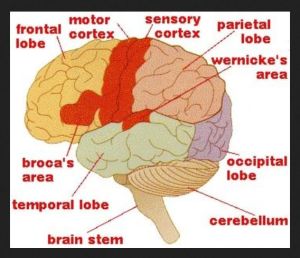
Picture credit: https://www.medlink.com/handouts/brain-anatomy
Let’s see what works and why. What does neuroscience (the study of the brain) tell us?
1. Spaced Repetition
- Why It Works: Spaced repetition (that is, repeating on a regular basis, for example daily or weekly) reinforces memory by re-exposing learners to information. This taps into the brain’s ability to consolidate memories into long-term storage.
- Neuroscience Basis: This method makes use of the spacing effect, where neural connections are strengthened over time, and repeated practice allows synaptic plasticity to build a more durable memory trace.
2. Learning in Context
- Why It Works: Associating words and phrases with real-life contexts or meaningful scenarios makes them easier to recall and apply. That’s why it doesn’t make much sense to just sit down and learn 10 random words from a dictionary, completely without context!
- Neuroscience Basis: Contextual learning activates multiple brain regions, such as the hippocampus and prefrontal cortex (this is a large portion of the frontal lobe). This creates stronger associative networks, which improve recall and understanding.
3. Speaking Out Loud
- Why It Works: Because it’s not just your brain that needs to get used to the new language, but also your speech organs (tongue, teeth, lips, etc.). Articulating words also improves pronunciation, strengthens active recall, and embeds new vocabulary in practical memory.
- Neuroscience Basis: Speaking activates the motor cortex (see picture above), linking motor skills with language centers (e.g., Broca’s area, see picture). Hearing your own voice provides auditory feedback, engaging the auditory cortex, which reinforces learning through multisensory pathways.
4. Chunking Information
Chunking in linguistic contexts means to group things together into a smaller unit. We do that with words that go together so that students can learn them as single concepts. A nice “chunk” to learn would be: pretty as a picture; make a mistake; You made my day!
- Why It Works: Breaking information into smaller “chunks” helps manage cognitive load, helps to recall these units, and helps students to sound more natural and correct, using words that actually go together.
- Neuroscience Basis: The working memory, processed in the prefrontal cortex (this is a large portion of the frontal lobe), can hold only a limited amount of information at a time. Chunking organizes information into meaningful patterns, making it easier for the brain to store and retrieve from long-term memory.
5. Interleaving Different Topics
Interleave means to mix and combine different things.
- Why It Works: Alternating between different aspects of language (e.g., grammar, vocabulary, listening, speaking) enhances learning by forcing the brain to make connections between topics.
- Neuroscience Basis: Interleaving promotes cognitive flexibility, encouraging the prefrontal cortex to switch between tasks and strengthen neural pathways. This enhances problem-solving skills and adaptability in language use.
6. Immersion
You might remember our last post about immersion. Now let’s see why exactly it works.
- Why It Works: Surrounding yourself with the target language mimics natural language acquisition, forcing the brain to make constant connections and associations.
- Neuroscience Basis: Immersion stimulates the default mode network (DMN), which supports subconscious processing of language patterns. It also increases activity in the angular gyrus, which is key for integrating sensory and linguistic information.
And now, a short test, just for fun:


Leave a Reply